Free delivery on two shirts or more | 30-day returns | 12-month warranty
English
Support



Free delivery on two shirts or more | 30-day returns | 12-month warranty
OUR BLOG
Latest news, tips, and insights
Choose one strong 90s shirt, keep the rest of the outfit simple, and let the colour, collar and fit do the talking.
90s football shirts are loved because they sit at the perfect point between sport, memory and style. They were made for packed terraces, early satellite TV, sticker albums and players whose highlights still travel online. Today, they also work as easy statement pieces: bold enough to lead an outfit, comfortable enough to wear all day, and familiar even to people who do not follow every result.
The 1990s were a loud decade for football design. Shirts moved away from plain blocks of colour and embraced shadow patterns, oversized crests, unusual collars, geometric panels and textured fabrics. Many designs looked different from a distance and then revealed more detail up close. That is one reason they photograph so well today.
The appeal is not only nostalgia. A good 90s shirt has shape and presence. The sleeves are often longer, the body is roomier, and the collar can change the whole mood. Compared with many modern slim cuts, these shirts feel relaxed. They have enough space to be worn over a T-shirt, under a jacket or with loose trousers without looking forced.
For collectors, the decade also marks a time when club and national-team identities became more visual. You can browse retro football shirts and often recognise a period instantly from the colour blocking, collar or pattern. That instant recognition is part of the charm.
The most loved 90s shirts are rarely quiet. They use large patterns, contrast sleeves, repeated tonal graphics or collars that feel closer to streetwear than training gear. The famous Arsenal away shirt from the early 90s, often nicknamed the bruised banana, is a perfect example of how a risky design can become beloved over time. It was divisive, then unforgettable, then widely celebrated.
National teams also pushed the look. Mexico's 1998 shirt with an Aztec-inspired pattern is one of the most widely recognised tournament designs of the decade. Nigeria's mid-90s shirts are remembered for their vibrant green and white energy. Croatia's 1998 checkerboard look became tied to a team that made a major World Cup impression. Germany's early-90s shirts used angular flag-colour graphics that still feel immediately identifiable.
These shirts work because they tell a story without needing explanation. A strong pattern can point to a country, a club era or a player memory. If you like national-team style, the national team football shirts collection is a natural place to start, especially if you prefer colour and tournament history over weekly club rivalry.
The 90s fit matters as much as the graphics. Many shirts from that period had a broader body, dropped shoulder feel and generous sleeve length. On the pitch, that was simply the style of the era. Off the pitch, it now makes them easy to wear with modern relaxed clothing.
A baggy 90s football shirt should look intentional, not just too big. The easiest rule is balance. If the shirt is wide and colourful, keep trousers clean: straight denim, relaxed black cargos, plain shorts or simple track pants. Footwear can be trainers, loafers or casual shoes depending on the setting. The shirt brings the energy; the rest of the outfit gives it structure.
If you prefer a neater shape, size based on shoulder width rather than only chest width. A roomy body can look good, but sleeves that fall too far below the elbow may feel more like a costume. At Your Jersey FC, many shirts are available from XS to 5XL, so you can choose a close fit, a vintage-style loose fit or something in between.
Some 90s shirts have become part of football's shared visual memory. Manchester United's early-90s home look with a lace-style collar is often connected with the rise of a dominant era. Barcelona's 90s stripes are remembered through European nights and great attacking players. AC Milan's red and black shirts carry the authority of a club associated with major continental success. Ajax's clean red-and-white layout from the mid-90s remains one of the clearest examples of how simplicity can be just as powerful as pattern.
There are also national shirts that never really disappear from conversation. Brazil's 1994 yellow shirt is tied to a World Cup-winning side. England's Euro 96 home shirt is remembered because of the tournament, the summer atmosphere and the players attached to it. France's 1998 blue shirt is linked with a home World Cup win and a generation that became legendary. These are not obscure collector references; they are widely documented football images.
If you collect by team, it helps to browse by club rather than by decade alone. Start with Manchester United, Barcelona, AC Milan or other clubs you connect with emotionally. The best shirt is not always the rarest-looking one. Often, it is the one that makes you remember a player, a match or a family living room.
The cleanest modern outfit is a 90s shirt with straight-leg jeans and simple trainers. Tuck it slightly at the front if the shirt is long, or leave it loose if the hem sits neatly. Add a plain overshirt, denim jacket or bomber when the weather changes. Avoid too many competing graphics; one football shirt already gives the outfit a centre.
For warmer days, wear it with neutral shorts and low-profile shoes. For evenings, use darker trousers and a jacket to make the colours feel more deliberate. Long sleeves are especially useful because they feel closer to a knit or rugby top. If that is your style, explore long sleeve football shirts for a softer, more layered look.
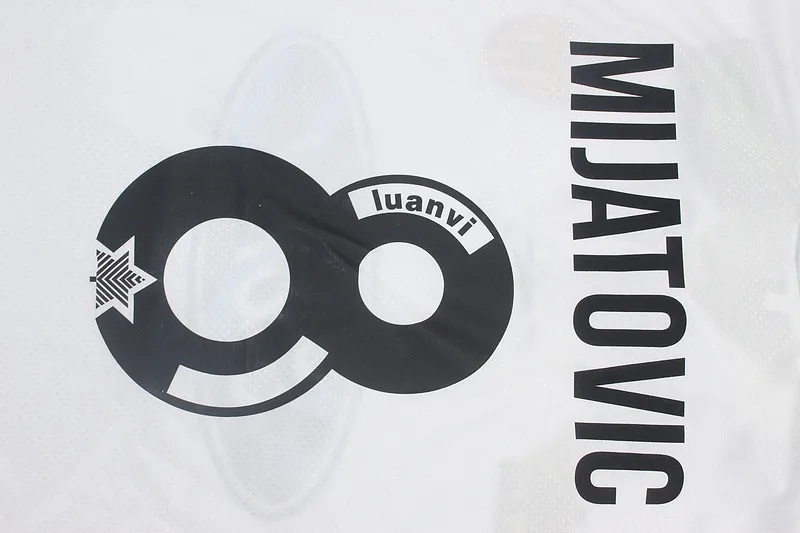
Printing can also change the mood. A name and number makes the shirt more connected to football history, while a blank back keeps it easier to style casually. Both approaches work. If you are buying your first 90s-inspired piece, a blank back or a famous player reference is usually safer than an obscure choice you may tire of.
Start with colour. If you already wear black, navy, denim or grey, a bright yellow, green, red or blue shirt can slot into your wardrobe easily. If your clothing is already colourful, choose a shirt with two main colours rather than a very busy graphic.
Next, check the collar. Polo collars feel smart and nostalgic. V-necks are easy and casual. Button or lace-style details make the shirt stand out more, but they also pull attention upward, so keep outer layers simple. Then consider sleeve length. Short sleeves feel lighter and sportier; long sleeves feel more styled and seasonal.
Finally, buy for how you will actually wear it. If it is for match days, go bold. If it is for weekends, travel or everyday rotation, choose something that works with three outfits you already own. Your Jersey FC offers secure payment by card or PayPal, free delivery from two shirts, 30-day returns and a 12-month warranty, which makes it easier to try a style without overthinking every detail.


They combine nostalgia with strong design. The decade had bold patterns, bigger collars, roomier fits and tournament moments that many fans still remember. That makes the shirts feel personal, but also easy to wear as relaxed statement pieces today.
A slightly loose fit usually looks right because many 90s shirts had a wider shape. The key is control: the shoulders should still feel natural, and the rest of the outfit should be simple enough to make the volume look intentional.
Yes. Pair it with straight jeans, neutral shorts, cargos or a plain jacket. If the shirt has a loud pattern, keep other graphics minimal. A blank back feels more casual, while name and number printing makes the football reference stronger.

Every kit tells the story of a season. We write about the ones worth remembering.