
FOOTBALL SHIRT BLOG
Football shirt history, kit design and collecting notes.
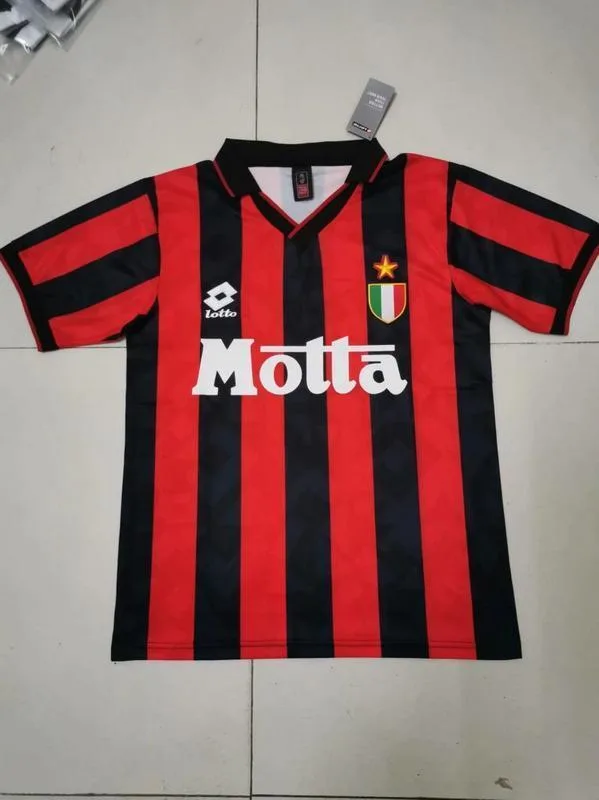
Choose the club or national-team era that defines the legend for you, then select a retro, fan or player fit and add a name and number if desired.
A football legend shirt is more than a familiar colour and famous number. It connects a player with a particular club, national team and period. Some supporters want the first breakthrough; others remember the established star or prefer an international shirt. This reference guide covers 21 icons using their stated playing careers and highlights the eras fans commonly consider when choosing.
Begin with your own football memory. A club supporter may favour the player’s longest or most recognisable spell there, while a tournament memory can make the national shirt the natural choice. A Retro shirt offers a relaxed fit in sizes S to 2XL. Fan versions have a regular supporter fit from S to 4XL, while Player versions run slimmer in sizes S to 2XL; consider going one size up.
Name and number printing can complete the connection, especially for players closely associated with numbers such as 10, 9, 7, 5, 3, 22 or 14. Check the selection carefully because printed shirts cannot be returned. Unprinted purchases have 30-day returns, shipping is included in every price, and buying three shirts makes the fourth free.
Pelé: The usual choice is a Santos shirt from 1956–1974 or Brazil from 1957–1971. His No. 10 and three World Cups make Pelé shirts a natural starting point for a historic collection; New York Cosmos provides later career context but is not stocked.
George Best: Manchester United, where he played from 1963–1974, is the available era most fans seek. Northern Ireland was his international side from 1964–1977, but it is not stocked. His No. 7 gives the shirt an immediately recognisable identity.
Johan Cruyff: Fans generally look toward Ajax from 1964–1973 or Barcelona from 1973–1978. The No. 14 makes Johan Cruyff shirts particularly distinctive. Feyenoord belongs to his later career context but is not stocked.
Franz Beckenbauer: Bayern Munich from 1964–1977 and Germany from 1965–1977 are the central choices. A No. 5 Franz Beckenbauer shirt suits collectors drawn to classic defenders. New York Cosmos and Hamburger SV are career context only.
Diego Maradona: Boca Juniors, Barcelona, Napoli and Argentina offer four different chapters, with Napoli 1984–1991 and Argentina 1977–1994 often forming the heart of a Maradona search. Browse Diego Maradona shirts around his famous No. 10; Argentinos Juniors and Sevilla are unstocked context.
Michel Platini: Juventus from 1982–1987 and France from 1976–1987 are the stocked choices for the No. 10 midfielder. AS Nancy and Saint-Étienne explain his earlier path but have no shirts in the shop.
Marco van Basten: Choose between Ajax 1981–1987 and AC Milan 1987–1995. Fans looking for a No. 9 commonly focus on his late-1980s and early-1990s period.
Ruud Gullit: AC Milan 1987–1993 and Chelsea 1995–1998 provide contrasting club options. PSV Eindhoven is part of his career story but is not stocked.
Roberto Baggio: Juventus 1990–1995, AC Milan 1995–1997, Inter Milan 1998–2000 and Italy 1988–2004 cover the available eras. His No. 10 makes an Italian club or national shirt an expressive 1990s choice; Fiorentina is unstocked context.
Carlos Valderrama: Colombia 1985–1998 is the main stocked era and the clearest route to his No. 10. Millonarios 1984–1985 is also stocked, while his other listed clubs provide career context only.
René Higuita: Supporters can choose Millonarios 1985–1986 or Colombia 1987–1999. His goalkeeper No. 1 makes either option stand apart from the forward and midfielder shirts in a legends collection; his other clubs are not stocked.
Ronaldo: Barcelona 1996–1997, Inter Milan 1997–2002, Real Madrid 2002–2007, AC Milan 2006–2008 and Brazil 1994–2011 give collectors several No. 9 eras. The most useful approach to Ronaldo shirts is choosing the team tied to your strongest memory; Cruzeiro and PSV are unstocked context.
Zinedine Zidane: Juventus 1996–2001, Real Madrid 2001–2006 and France 1994–2006 are the stocked choices. Fans often select Zinedine Zidane shirts by deciding between his No. 5 club identity and his wider France era. Bordeaux is not stocked.
David Beckham: Manchester United 1992–2003, Real Madrid 2003–2007, AC Milan 2008–2010, Paris Saint-Germain 2012–2013 and England 1996–2009 create an unusually broad choice. No. 7 collectors often begin with David Beckham shirts from Manchester or England; LA Galaxy is unstocked context.
Roberto Carlos: Inter Milan 1995–1996, Real Madrid 1996–2007 and Brazil 1992–2006 are available. His No. 3 makes the long Real Madrid spell or Brazil period the clearest choice; Palmeiras and Fenerbahçe are context only.
Paolo Maldini: His career makes selection refreshingly focused: AC Milan from 1985–2009 or Italy from 1988–2002. A No. 3 Paolo Maldini shirt represents either enduring club loyalty or an international defensive icon.
Ronaldinho: Paris Saint-Germain 2001–2003, Barcelona 2003–2008, AC Milan 2008–2011 and Brazil 1999–2013 are stocked. Fans exploring Ronaldinho shirts usually concentrate on his No. 10 years with Barcelona or Brazil; Grêmio and Flamengo are unstocked context.
Kaká: São Paulo 2001–2003, AC Milan 2003–2009 and 2013–2014, Real Madrid 2009–2013 and Brazil 2002–2016 provide the choices. His No. 22 points many collectors toward the Milan years; Orlando City is not stocked.
Cristiano Ronaldo: Sporting CP, Manchester United, Real Madrid, Juventus and Portugal are all available eras. Fans choosing Cristiano Ronaldo shirts often compare his No. 7 years in Manchester, Madrid and Portugal. Al-Nassr is career context only.
Lionel Messi: Barcelona 2004–2021, Paris Saint-Germain 2021–2023 and Argentina from 2005 are stocked. The central choice for Lionel Messi shirts is usually Barcelona versus Argentina, both strongly connected to his No. 10; Inter Miami is not stocked.
Neymar Jr: Santos 2009–2013, Barcelona 2013–2017, Paris Saint-Germain 2017–2023 and Brazil from 2010 cover his stocked journey. A Neymar shirts search commonly centres on Barcelona or Brazil and the No. 10; Al-Hilal is unstocked context.
The right answer is therefore personal but not complicated: pick the team and period you genuinely associate with the player, choose the fit you will enjoy wearing, and use printing only after checking every detail. That produces a shirt with a clear story rather than a selection based solely on fame.
Choose the club or national-team period you most strongly associate with the player. Then compare Retro, Fan and Player fits according to how you plan to wear it.
A club shirt suits loyalty to a team or a particular career chapter. A national shirt works well when your strongest memory comes from international football or a famous squad number.
Fan versions have a regular fit from S to 4XL. Player versions are slimmer, from S to 2XL, so consider one size up. Retro shirts have a relaxed fit from S to 2XL.
Optional name and number printing is available. Confirm the spelling, number and size first because printed shirts cannot be returned.
Every kit tells the story of a season. We write about the ones worth remembering.